
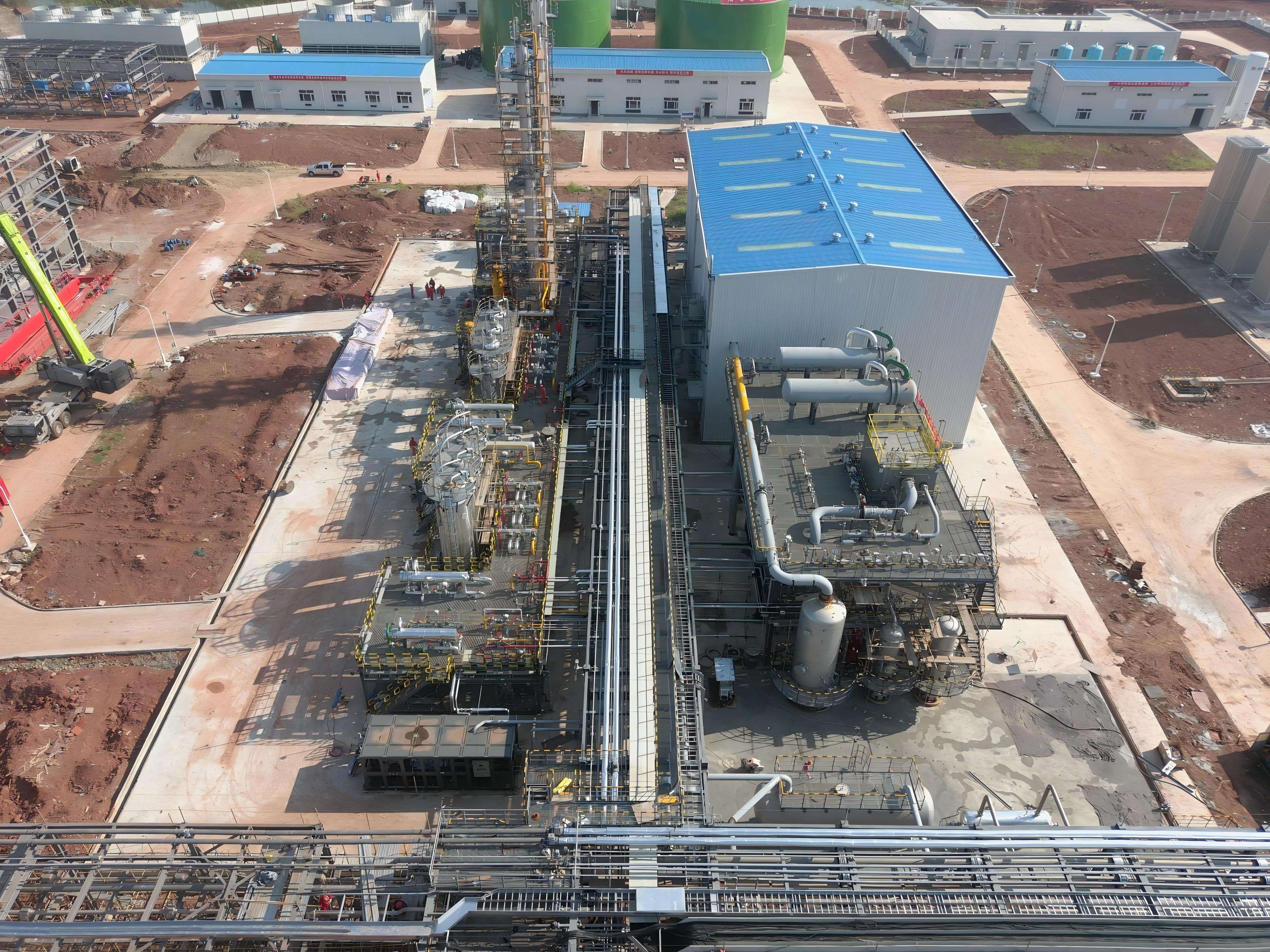
For industrial buyers, EPC contractors, and energy developers, the value of LNG liquefaction technology is not just in turning gas into LNG. The real value lies in building plants that combine high process efficiency, reliable pretreatment, flexible plant design, and intelligent automation. That is also the direction emphasized across RongTeng’s LNG-related product and application pages, where liquefaction, purification, tail gas treatment, and automation are presented as connected parts of one complete solution.
Why LNG liquefaction matters in the global supply chain
Pipeline networks remain essential for regional gas distribution, but they cannot solve every supply challenge. Many importing markets, island grids, remote industrial zones, and coastal energy hubs need a fuel that can move efficiently beyond the limits of fixed pipeline infrastructure. LNG makes that possible by allowing natural gas to be shipped, stored, and regasified where demand exists. The IEA notes that expanding LNG supply can improve gas supply security and affordability, especially for emerging and price-sensitive import markets.
This is why LNG liquefaction plants have become more than processing facilities. They are now strategic infrastructure assets that support global balancing of supply and demand. A well-designed liquefaction plant improves efficiency not only inside the plant itself, but across the entire value chain: upstream gas monetization, midstream transport logistics, terminal storage, and downstream fuel use in power generation, industrial heating, marine fuel, and peak shaving applications. RongTeng’s application pages reflect this broad downstream positioning, highlighting LNG use in gas turbine power generation, industrial heating, heavy transport, and urban gas balancing.
The technology foundation: pretreatment plus liquefaction
A high-efficiency LNG plant starts long before gas enters the cryogenic section. Feed gas must be conditioned so the liquefaction process can run safely and consistently. Acid gases such as CO₂ and H₂S need to be removed to avoid corrosion, freezing risks, and process instability. Water must also be reduced to extremely low levels to prevent ice formation inside cryogenic equipment. RongTeng’s own LNG content highlights this pretreatment logic by separating acid gas removal, dehydration, and natural gas liquefaction into coordinated process units.
Once pretreatment is completed, the gas moves into the liquefaction stage, where refrigeration cycles progressively cool the stream to LNG temperature. Depending on plant scale, feed gas composition, and project economics, designers may choose different process routes such as cascade systems, mixed-refrigerant solutions, or nitrogen-expander-based configurations. RongTeng’s published LNG blog content specifically discusses multi-stage refrigeration and highlights the importance of choosing process technologies that balance energy use, control stability, and equipment safety.
How liquefaction technology improves efficiency
1. Better transport economics
Liquefaction dramatically reduces gas volume, making marine shipping, cryogenic trucking, and storage much more efficient than trying to move the same energy in gaseous form over long distances without pipelines. This allows producers to reach international buyers, monetize stranded gas, and improve supply responsiveness in regions where pipeline connectivity is limited.
2. Higher value from gas resources
LNG plants help transform raw or remotely located gas into a marketable product. This is especially important for offshore fields, isolated gas reserves, associated gas recovery, and markets where on-site gas demand is too small to justify conventional pipeline investment. A liquefaction facility therefore improves asset utilization as well as market access.
3. Integrated purification improves process reliability
Efficiency is not only about compressor power consumption. It is also about avoiding trips, corrosion, freeze-outs, and off-spec LNG. When dehydration, sulfur removal, acid gas removal, and liquefaction are designed as an integrated system, plant reliability improves and lifecycle operating costs can be reduced. RongTeng’s product structure explicitly groups these purification and treatment units with LNG liquefaction equipment, reinforcing the importance of system-level integration.
4. Automation reduces operating variability
Modern LNG plants rely heavily on automation for temperature control, refrigerant management, pressure balancing, safety shutdown logic, and overall process optimization. RongTeng positions industrial automation and intelligent manufacturing as core capabilities alongside gas treatment and liquefaction, which is consistent with how high-efficiency LNG plants are typically engineered today. Better automation means more stable operation, improved repeatability, faster troubleshooting, and better performance under changing feed gas conditions.
5. Modular and scalable design speeds deployment
Global gas demand is not uniform, so not every project needs a massive baseload LNG train. In many cases, modular and medium-scale liquefaction systems offer a better balance of CAPEX, installation speed, and future expandability. RongTeng’s site presents multiple capacity references and also highlights manufacturing capability and custom plant design, which supports the market trend toward scalable LNG solutions for different project sizes and operating environments.
Key design factors that influence plant efficiency
Not every LNG liquefaction plant performs the same way. Efficiency depends on a combination of process design, feed gas quality, equipment selection, and control strategy. In practical terms, project owners should pay close attention to the following:
Feed gas composition: Gas with high CO₂, H₂S, nitrogen, or water content requires more pretreatment. If pretreatment is weak, downstream liquefaction efficiency suffers.
Capacity matching: Plant size should align with real gas availability and downstream demand. Oversized systems can reduce utilization, while undersized systems can constrain revenue and supply responsiveness. RongTeng’s product lineup includes multiple LNG-related capacities, reflecting the importance of matching design to project scale.
Refrigeration process selection: Different liquefaction cycles offer different trade-offs in efficiency, footprint, complexity, and adaptability. The best choice depends on location, climate, utilities, maintenance strategy, and project economics.
Automation and controls: Stable LNG quality and low energy intensity require precise control across pretreatment, compression, heat exchange, and storage. Intelligent control systems help plants respond to feed variability without sacrificing product consistency.
Manufacturing and delivery capability: For global projects, plant efficiency also depends on execution quality. RongTeng emphasizes workshop scale, engineering capability, and one-stop delivery, which matters because fabrication quality, skid integration, and schedule control all affect project outcomes.
LNG plant technology and the future of cleaner gas supply
LNG is not the final answer to every energy challenge, but it remains a critical option for improving access to natural gas where pipelines are unavailable or insufficient. It can also support cleaner combustion compared with higher-emission conventional fuels in applications such as shipping, industrial heating, and distributed power. RongTeng’s LNG application pages repeatedly connect liquefaction technology with decarbonization, lower SOx and particulate emissions, and broader downstream fuel flexibility.
As LNG markets continue evolving, buyers are increasingly looking for solutions that combine process efficiency, modularity, purification reliability, and digital automation. That is the practical direction of modern LNG plant development: not just bigger plants, but smarter and more adaptable ones. Suppliers that can integrate liquefaction, gas treatment, tail gas handling, and control systems into one engineering package are better positioned to support efficient global gas supply chains. RongTeng’s site clearly presents itself in that integrated-solution category.
Final thoughts
LNG liquefaction plant technology improves efficiency in global natural gas supply by making gas easier to transport, easier to store, and easier to deliver to markets that pipelines cannot reach. But the strongest projects are not built on liquefaction alone. They depend on complete system thinking: pretreatment, cryogenic design, automation, scalability, and dependable manufacturing execution.
For companies planning LNG infrastructure, the right approach is to evaluate the full process chain rather than focusing on one piece of equipment. An integrated LNG solution can improve plant uptime, reduce operational risk, strengthen supply flexibility, and create long-term value in a fast-changing global gas market.
FAQ
1. What is the main advantage of LNG liquefaction in global natural gas supply?
The main advantage is that liquefaction reduces natural gas volume by roughly 600 times, making long-distance storage and transport much more efficient and allowing gas to reach markets beyond pipeline networks.
2. Why is gas pretreatment so important before liquefaction?
Pretreatment removes contaminants such as CO₂, H₂S, and water that can cause corrosion, freezing, equipment damage, and unstable plant performance during cryogenic operation.
3. How does automation improve LNG plant efficiency?
Automation helps maintain stable temperatures, pressures, refrigerant balance, and safety controls across the process. This improves operational consistency, reduces manual intervention, and supports faster response to changing gas conditions.
4. What should buyers look for in an LNG liquefaction plant supplier?
Buyers should look for integrated engineering capability across liquefaction, purification, tail gas treatment, automation, manufacturing quality, and project-specific customization. These factors usually have a direct impact on long-term plant efficiency and reliability.