
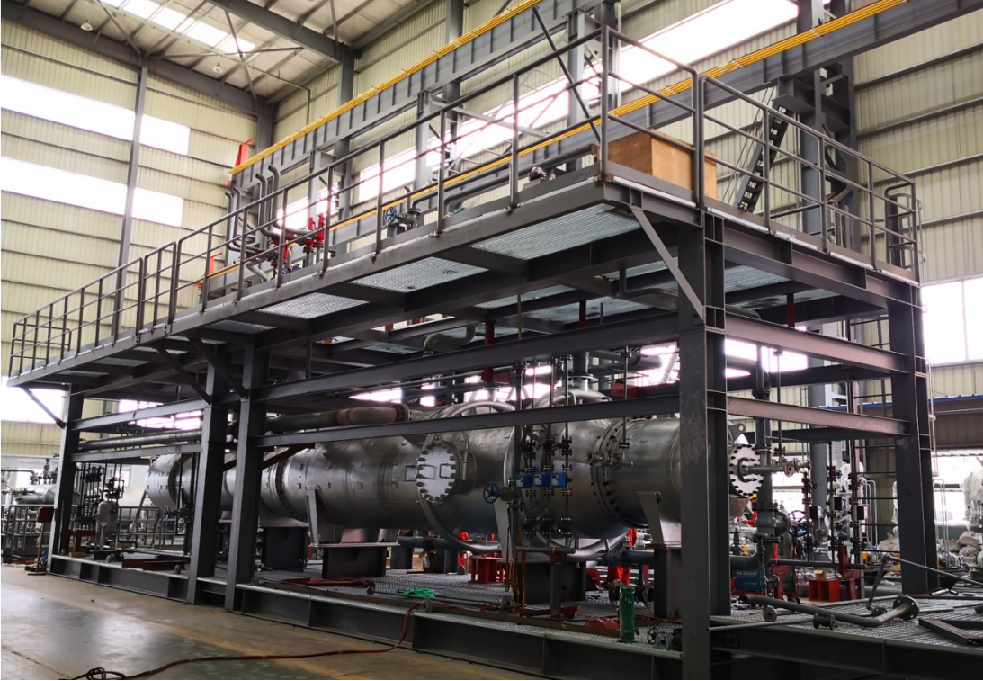
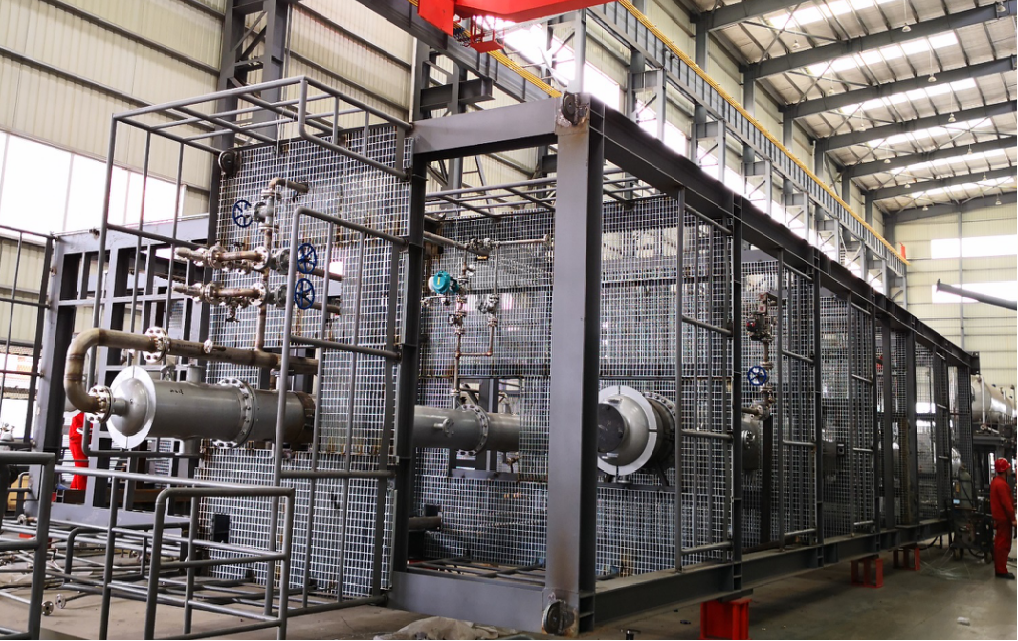
The Role of Tail Gas Treatment Unit in Closing the Sulfur Recovery Gap
Claus sulfur recovery units do a pretty good job converting most hydrogen sulfide (H2S) into elemental sulfur, but there's still a big problem left unsolved. What remains in the tail gas stream includes sulfur dioxide (SO2), carbonyl sulfide (COS), and carbon disulfide (CS2) at levels around 300 to 500 parts per million by volume. These leftover compounds basically happen because of how thermodynamics works in these processes plus some incomplete reactions along the way. If nothing gets done about them, these residual gases end up causing acid rain issues, running afoul of environmental regulations, and keeping sulfur recovery rates stuck somewhere between 97% and 98%. That leaves quite a bit on the table for improvement in industrial applications.
Why Claus Units Alone Fall Short: Residual SO₂, COS, and CS₂ in Tail Gas
The Claus process faces inherent limitations because of equilibrium constraints that stop it from converting all sulfur compounds completely. Compounds like carbonyl sulfide (COS) and carbon disulfide (CS2) just won't break down through hydrolysis in the catalytic sections. Meanwhile, sulfur dioxide (SO2) tends to form whenever there's an imbalance in oxygen levels during thermal combustion. What happens next? These stubborn compounds slip past regular condensers and end up right in the tail gas stream. Plants aiming for sulfur emissions below 10 parts per million volume or wanting over 99.9% sulfur recovery simply can't rely on standard Claus units alone anymore. Regulations such as the EPA's New Source Performance Standards (specifically Subpart Ja) now require almost complete sulfur capture, which means traditional Claus setups fall short of compliance requirements.
Tail Gas Treatment Unit Core Mechanism: Catalytic Hydrogenation + Amine-Based H₂S Capture
Tail gas treatment units, or TGTUs for short, fill in this missing piece with their two step approach. Stage one involves catalytic hydrogenation where leftover sulfur compounds like SO2, COS, and CS2 get converted into hydrogen sulfide. This happens thanks to those cobalt molybdenum catalysts working around 280 to 320 degrees Celsius. What comes next is pretty interesting. The treated gas moves into what's called an amine contactor section. Most plants use either MDEA or specially formulated amines here. These substances grab hold of the hydrogen sulfide molecules specifically. After purification, the gas stream contains less than 10 parts per million by volume of total sulfur content. Meanwhile, the amine solution that picked up all that H2S gets cleaned up again so it can go back into service. The whole system works together in a loop, recovering over 99.9 percent of sulfur compounds. Not only does this turn what would be waste into something valuable for sale, but it also keeps operations within current environmental regulations as they continue to change.
Selecting and Sizing a Tail Gas Treatment Unit for Compliance and Efficiency
Tail gas treatment unit (TGTU) selection directly determines operational compliance and cost efficiency in sulfur recovery. Unlike one-size-fits-all approaches, strategic sizing requires analyzing site-specific constraints and environmental targets.
Matching TGTU Technology to Feed Gas Composition (e.g., High CO₂ or Hydrocarbon Content)
Feed composition dictates technology viability. For high-CO₂ streams (>15%), amine-based systems like MDEA minimize solvent degradation, whereas catalytic hydrogenation excels at converting carbonyl sulfide (COS) in hydrocarbon-rich feeds. Units processing mercaptans may require integrated oxidation stages to prevent downstream fouling.
Design Drivers: Target H₂S Emission Limits (<10 ppmv), Carbon Pricing Exposure, and Permit Requirements
Regulatory H₂S thresholds (<10 ppmv) necessitate 99.9%+ sulfur recovery. Beyond emissions, carbon pricing schemes—like the EU’s $90/ton CO₂e levy—make energy-efficient designs critical. Permit timelines also influence technology selection: modular TGTUs can reduce deployment time by 6–8 months versus custom-engineered builds, accelerating compliance without compromising performance.
Proven Performance: Tail Gas Treatment Unit Deployment and Operational Impact
QatarEnergy Laffan Gas Plant: 99.99% Total Sulfur Recovery After TGTU Retrofit
The Laffan Gas Plant operated by QatarEnergy recently made significant progress in sulfur recovery following upgrades to its tail gas treatment system. The plant combined catalytic reduction techniques with amine scrubbing technology to capture leftover hydrogen sulfide (H2S) and sulfur dioxide (SO2) that typically escapes from standard Claus units. This two-step process has maintained sulfur recovery rates above 99.99%, surpassing not only local environmental regulations but also beating the plant's initial goal of 99.8%. Real-world operation shows sulfur dioxide emissions staying well under 10 parts per million volume even when dealing with fluctuating gas compositions. These results highlight how retrofitting TGTUs can help facilities meet regulatory requirements while still producing valuable commercial quantities of recovered sulfur.
Global Adoption Trend: 68% Increase in TGTU Installations Since 2020 (IEA 2023)
The push for cleaner air through stricter emissions rules and carbon pricing has really boosted how many companies are adopting TGTU technology worldwide. The International Energy Agency reports that installation numbers jumped by nearly 70% from 2020 to 2023 as plant operators worked to fix old systems that weren't capturing enough sulfur. What makes this tech so valuable is its ability to grab almost all sulfur out of exhaust gases, which matters a lot in areas where regulations demand sulfur dioxide levels below 50 parts per million by volume. Plus, TGTU works well across different setups too. Smaller gas processing units can install compact versions while big refineries integrate them into their operations as carbon costs keep climbing year after year.
FAQ
What is a Tail Gas Treatment Unit (TGTU)?
A Tail Gas Treatment Unit (TGTU) is a system designed to enhance sulfur recovery from tail gas streams by converting residual sulfur compounds back into hydrogen sulfide, which can then be captured and processed.
Why are Claus units not sufficient for sulfur removal?
Claus units have limitations due to equilibrium constraints and do not convert all sulfur compounds like COS and CS2. Additionally, SO2 formation from oxygen imbalances cannot be adequately managed in Claus units alone.
What are the benefits of using a TGTU?
Using a TGTU allows for sulfur recovery rates exceeding 99.9%, reduces emissions, and ensures environmental compliance. It also converts what would otherwise be waste into commercially valuable sulfur.
What factors influence TGTU selection?
Factors such as feed gas composition, target emission limits, carbon pricing exposure, and permit requirements influence the selection and sizing of a TGTU for specific plant needs.