
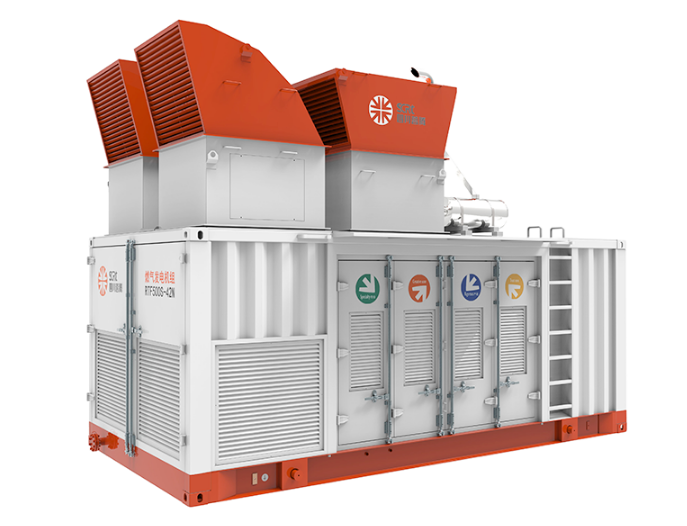
You have probably seen those big boxes in commercial areas or maybe even a smaller one sitting next to someone’s house. They are natural gas generators, and they are becoming really popular these days. Unlike the old school generators that run on gasoline or diesel, these units hook directly into the gas line that might already be running to your home or business. But what is actually going on inside that metal box? Let me break it down for you in plain English.
What exactly is a natural gas generator?
Simply put, a natural gas generator is a machine that turns the energy locked inside natural gas into electricity you can actually use. It is called a genset for short, which just means generator set. The core idea is pretty simple. You have an engine that burns the gas, and that engine spins a generator head that makes the electricity. Rongteng builds these things in all sorts of sizes, from smaller units that can power a few lights and a fridge during an outage, all the way up to massive industrial units that can keep an entire factory running around the clock. What makes a natural gas generator different from its diesel cousin is the fuel source. Instead of storing liquid fuel in a tank on site, you get a continuous supply straight from the utility pipe. That means no running out of gas in the middle of a storm.
The four strokes that make it all happen
A natural gas generator uses what is called a four stroke cycle. Most people have heard this term before but let me walk you through what actually happens inside the engine. The first stroke is intake. The piston moves down and the engine pulls in a mixture of air and natural gas. On the second stroke, the piston moves back up and compresses that mixture. This raises the pressure and temperature inside the cylinder quite a bit. Then comes the third stroke, which is power. A spark plug fires and ignites the compressed gas and air mixture. The explosion pushes the piston down with a lot of force, and that force turns the crankshaft. The fourth stroke is exhaust. The piston moves back up again and pushes the leftover gases out of the cylinder. Then the whole thing starts over. This cycle repeats thousands of times every single minute while the engine is running. Each tiny explosion adds a little bit of rotational force to the crankshaft, and all those little pushes add up to a lot of spinning power.
Why ignition works differently with gas
One of the big differences between a natural gas generator and a diesel unit is how the fuel gets lit. Diesel engines rely on compression alone to get things burning. They squeeze the air so hard that it gets extremely hot, then they inject fuel and it ignites automatically. A natural gas generator cannot do that. Natural gas needs a spark plug, just like the one in your car. That spark plug fires at exactly the right moment to light the air and fuel mixture. Getting the timing right is really important. If the spark happens too early or too late, the engine loses power and could even get damaged over time. Modern natural gas generator systems use electronic controls to make sure that spark happens at the perfect instant every single time.
Air and fuel mixing before combustion
Before that spark plug can do its job, the natural gas and air have to be mixed together properly. The engine pulls in air through the intake system, and at the same time, natural gas is injected into that air stream. The mixing happens in the intake manifold or sometimes right inside the cylinder depending on the design. Getting the mixture ratio correct is really important. Too much gas and the engine runs rich, which wastes fuel and creates more pollution. Not enough gas and the engine runs lean, which can cause overheating and misfires. A good natural gas generator keeps that mixture right in the sweet spot so the engine runs smooth and efficient.
Turning spinning motion into electricity
So the engine is spinning the crankshaft. Now what? That spinning motion is mechanical energy, but what you need is electrical energy. That is where the alternator comes in. The alternator is basically a big magnetic field with copper wire windings inside. When the crankshaft turns the alternator rotor, it creates a moving magnetic field. That moving field pushes electrons through the wires, which creates alternating current, or AC power. For homes and most businesses, that power comes out at around 120 or 240 volts at 60 hertz. The voltage and frequency have to stay stable, or your sensitive electronics could get fried. A natural gas generator uses a device called an automatic voltage regulator to keep everything steady no matter how much power you are drawing from it.
What happens to the leftover heat
When natural gas burns inside the engine, it creates a lot of heat. Some of that heat turns into useful mechanical work, but a surprising amount just goes out the exhaust pipe or radiates off the engine block. In a standard setup, that is wasted energy. But some natural gas generator systems capture that waste heat and put it to work. This is called combined heat and power, or cogeneration. The captured heat can warm up water, heat a building, or even run another piece of equipment. When you add that captured heat into the equation, the overall efficiency of a natural gas generator jumps way up. Instead of just getting maybe 35 to 40 percent of the fuel energy as electricity, you can get up into the 80 to 90 percent range when you count the useful heat too.
Why people choose natural gas generators
A natural gas generator gives you a few really nice benefits over other types. First, you never have to worry about fuel running out as long as the gas line stays active. That is huge during a multi day power outage when gas stations might be closed. Second, natural gas burns cleaner than diesel or gasoline. That means less smell, less smoke, and fewer harmful emissions coming out of the exhaust. Third, the engine tends to last longer because there is less carbon buildup inside from the cleaner burning fuel. Maintenance intervals are typically longer too. Of course, nothing is perfect. A natural gas generator needs a hookup to the gas main, so if you are in a really remote area without gas service, it is not going to work. But for most people living in towns and cities, a natural gas generator is a solid choice for backup power.
Putting it all together
So there you have it. A natural gas generator takes fuel from the pipe, mixes it with air, compresses the mixture, lights it with a spark plug, and uses the force of that tiny explosion to spin a crankshaft. That spinning motion turns a big magnetic field inside an alternator, which pushes electrons through wires to make electricity you can use. The leftover heat either goes out into the air or gets captured to warm something else. The whole thing is a pretty clever piece of engineering when you think about it, and it is a technology that keeps getting better every year.