
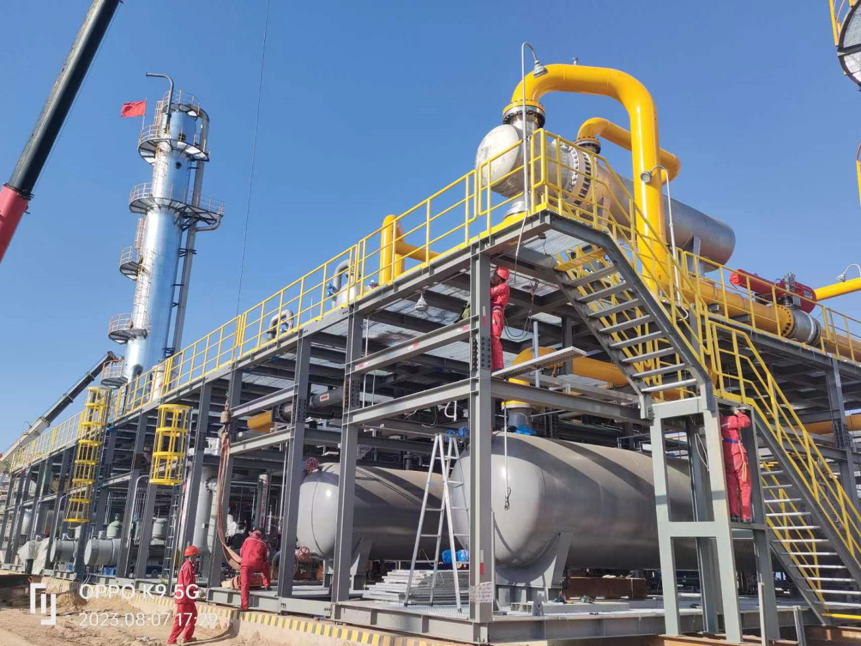
Understanding Contaminants and Their Impact on Gas Treatment Unit Performance
Common contaminant types and sizes (e.g., hydrogen sulfide, water, particulates)
Gas treatment units need to deal with all sorts of contaminants that come in many different sizes and chemical forms. Take hydrogen sulfide (H2S) for instance, which shows up in gas streams anywhere from parts per million right up to percentage levels. This stuff is bad news because it's toxic and eats away at equipment over time. Water vapor might not count as a particulate technically, but when it cools down it turns into tiny liquid droplets measuring everything from below one micron up to several microns across. Then there are solid particles like pipe scale, rust flakes, and sand grains floating around too. These usually measure between 1 and 40 microns and often find their way into the system during drilling operations or through pipelines. Because each type of contaminant behaves differently depending on whether it's a gas, liquid, or solid and how big those particles actually are, designing proper filtration systems becomes absolutely essential if we want clean gas at the end of the process.
Effects of impurities on gas quality and downstream processing efficiency
When natural gas contains impurities, it really messes with both the quality of the final product and how efficiently plants can process it. Take hydrogen sulfide for instance—it lowers the actual heating value of the gas while posing serious safety risks that nobody wants to deal with when transporting or selling the stuff. Then there's water vapor which tends to form hydrates inside pipeline systems, leading to all sorts of blockage problems and making sure the gas keeps flowing properly becomes a nightmare. Some recent research shows that when contaminants cause foaming issues in those amine treatment units, operators see their ability to remove acidic gases drop by around 30 percent according to findings published last year in Gas Processing Journal. All these mean equipment further down the line has to work harder than intended, burning through more energy and slowing things down overall. Put it all together and what do we get? Higher expenses throughout the entire operation plus thinner profit margins for everyone involved in gas processing from start to finish.
System degradation risks: Fouling of dehydrators, compressors, and other Gas Treatment Units
When contaminants get into equipment, they really speed up wear and cause all sorts of problems in important parts throughout the system. Dehydrators just don't work as well anymore once they start dealing with liquid carryover and those tiny particles floating around. The result? They need to be regenerated much more often than normal. Take compressors for instance - running them with wet or acidic gases causes serious erosion and corrosion issues. A recent report found that when hydrogen sulfide levels go over 50 ppm, compressors basically only last 60% as long as they should according to Turbomachinery International research from last year. Heat exchangers and reactors also face big trouble from fouling, which creates bigger pressure drops and makes heat transfer less efficient. Plants end up having to run everything hotter and under more pressure to compensate. All this mechanical breakdown means maintenance crews are constantly on call, and there's always that nagging risk of unexpected shutdowns happening at the worst possible times, which obviously affects both how reliably production runs and what kind of money gets spent on operations month after month.
Enhancing Filtration Efficiency with Advanced Filter Separators in Gas Treatment Units
Multi-stage filtration systems: Beta ratios, micron ratings, and separation performance
Filter separators that are considered advanced typically rely on multi stage filtration processes to get rid of contaminants effectively. Stage one generally grabs solid particles through particulate filters rated for certain microns. What comes next involves coalescing media that tackles liquid aerosols. When talking about performance metrics, industry professionals look at something called Beta ratios. A reading of B5 equals 200 means the system removes 99.5% of particles measuring 5 microns. Some top notch systems actually reach around 99.9% efficiency for those tiny 0.3 micron particles without creating too much back pressure. This balance between thorough cleaning and minimal resistance helps maintain good flow rates and protects whatever equipment lies downstream from potential damage.
Coalescing filters for effective gas dehydration and equipment protection
Gas dehydration systems rely heavily on coalescing filters to strip out those pesky liquid aerosols and moisture content. The basic principle involves pushing gas through specially engineered filter media where tiny water droplets merge together until they become heavy enough to drop out of the stream. Without this critical step, equipment like compressors, flow meters, and pressure regulators would suffer serious wear from constant exposure to liquid contaminants. Well-engineered coalescing filters do more than just protect hardware though. They actually stop the formation of foam in glycol dehydrators, cut down on costly repairs, and ultimately make sure the final product complies with strict pipeline specs regarding moisture content. Most operators find these filters worth the investment when considering both equipment longevity and compliance requirements.
Optimizing Multi-Stage Gas Treatment Unit Design for Maximum Efficiency
Design principles for efficient multi-stage filtration and purification workflows
Designing effective multi stage gas treatment units requires sticking to some basic rules that boost overall performance. Start by grabbing those bigger particles first before they mess up the finer filters downstream. That way we avoid clogging the expensive parts too soon. Next comes choosing the right filter materials based on their micron ratings and beta ratios. Typically systems move through coarse particulate filters, then onto coalescing stages, finishing with adsorption beds for those tiny molecular impurities. Velocity control matters too. Get it wrong and everything gets thrown back into the stream instead of being captured properly. And don't forget about having backup systems or bypass options so operations can keep running when maintenance is needed. Good designs often hit over 99.9% contaminant removal rates while keeping pressure drops low and energy consumption reasonable across different operating conditions.
Best practices in process configuration to reduce energy use and downtime
Getting the process setup right makes a big difference in both energy savings and system reliability. For starters, companies should look at heat integration opportunities where possible. Many plants find they can save money by capturing waste heat from their compressors and using it to regenerate those pesky adsorption beds. Installing variable frequency drives on pumps and compressors is another smart move since these devices let operators adjust power usage according to actual demand rather than running full blast all the time. This kind of approach usually brings down overall energy costs somewhere between 15% and 25%. When designing new systems, engineers often build parallel treatment trains with automatic switching capabilities so operations don't grind to a halt when maintenance needs attention. Automated blowdown systems paired with regular filter checks also help plan maintenance around scheduled downtime rather than emergency repairs. Plants that implement these kinds of improvements generally see energy reductions in the 20-30% range and keep their equipment running smoothly over 98% of the time.
Leveraging Digital Technologies for Real-Time Gas Treatment Unit Control
Implementing advanced process control (APC) systems for continuous optimization
Advanced Process Control (APC) systems work by making constant tweaks to operations as they go along, all based on what the data is telling them. These systems rely on prediction models and various algorithms to keep things running at their best even when raw materials come in different than expected. The result? Less energy gets used up while still getting clean output from the process. When something goes off track, APC adjusts pressure settings, temperatures, and how much stuff flows through automatically. This happens almost instantly compared to what humans can manage manually. Plants using this tech report better consistency in their gas products plus savings on day-to-day expenses because everything runs smoother without those unexpected hiccups.
Monitoring critical parameters: Pressure, temperature, and flow rate
Keeping track of pressure levels, temperature changes, and how fast fluids are moving forms the basis for good system control. Today's sensor setups gather all these measurements from several spots throughout the system, giving operators a comprehensive picture of what's going on. This helps spot problems before they become major issues. When we monitor pressure in real time, we can catch when filters start getting clogged or membranes begin to foul. Tracking temperature fluctuations keeps heat-sensitive processes running smoothly within their ideal operating window. Looking at flow rates together with pressure differences allows technicians to calculate system efficiency accurately and often means catching maintenance problems long before equipment breaks down completely.
Proactive Maintenance Strategies to Sustain Gas Treatment Unit Performance
Implementing a comprehensive preventive maintenance program is essential for sustaining optimal performance. Regular inspections, cleaning, lubrication, and timely replacement of worn components help prevent unexpected breakdowns and maintain processing efficiency. Facilities using proactive maintenance strategies experience up to 37% fewer unplanned shutdowns compared to reactive approaches.
Routine monitoring and preventive maintenance to avoid system inefficiencies
Continuous monitoring of pressure differentials, temperature fluctuations, and flow rates allows early detection of developing issues. Analyzing real-time performance data enables operators to schedule maintenance during planned outages, minimizing disruption and maintaining consistent gas quality.
Equipment upgrades and lifecycle management for long-term reliability
Upgrading equipment and managing assets throughout their lifespan helps gas treatment units last longer and work better. When companies replace old filters, install new control systems, and start using smart monitoring tools, they often see energy savings around 20-25%. Good maintenance planning isn't just about fixing things when they break down. It means looking ahead at what parts will need replacing next year versus what major investments might be needed five years from now. This approach keeps operations running smoothly without breaking the bank on unexpected repairs or premature replacements.
FAQ
What are the common contaminants in gas streams?
Common contaminants include hydrogen sulfide, water vapor, particulates like pipe scale and sand grains, each with varying sizes and effects on equipment and processes.
How do impurities affect gas treatment efficiency?
Impurities can lower gas quality, cause equipment degradation, lead to blockages, and increase operational costs due to increased energy consumption and reduced processing efficiency.
Why are multi-stage filtration systems important?
Multi-stage filtration systems improve contaminant removal efficiency, protect downstream equipment, and maintain high flow rates with minimal pressure drop.
Table of Contents
- Understanding Contaminants and Their Impact on Gas Treatment Unit Performance
- Enhancing Filtration Efficiency with Advanced Filter Separators in Gas Treatment Units
- Optimizing Multi-Stage Gas Treatment Unit Design for Maximum Efficiency
- Leveraging Digital Technologies for Real-Time Gas Treatment Unit Control
- Proactive Maintenance Strategies to Sustain Gas Treatment Unit Performance
- FAQ