
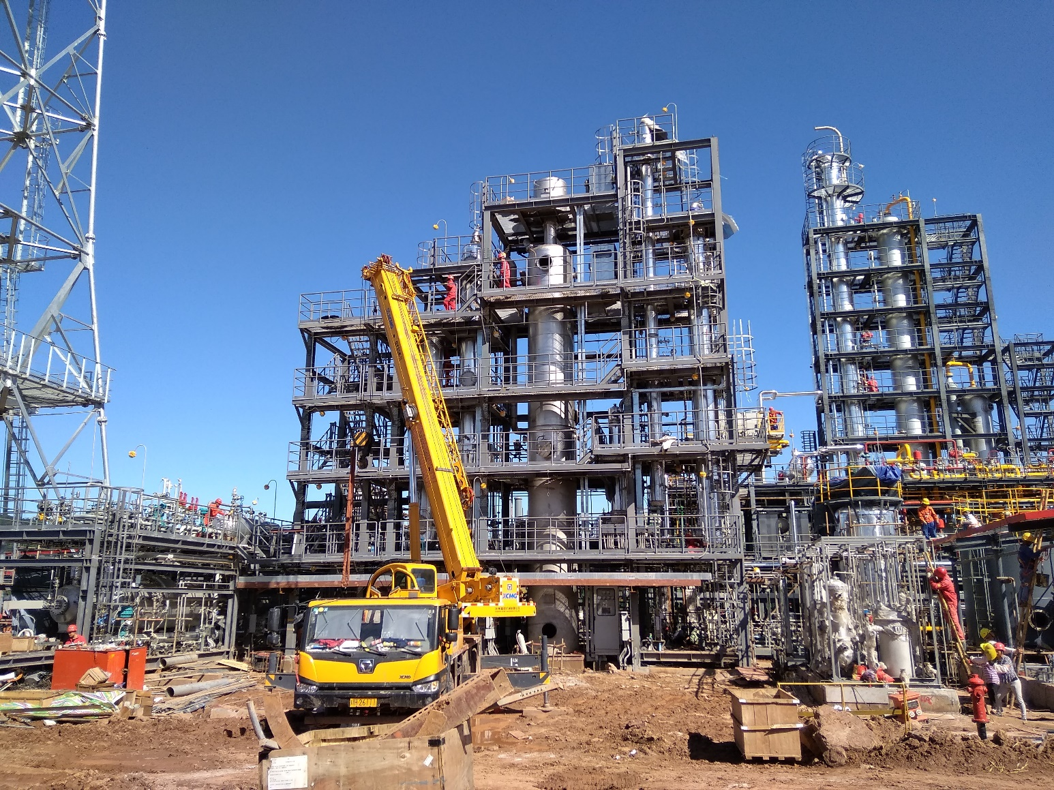
Fundamentals of Natural Gas Purification and Plant Integration
Understanding the Natural Gas Purification Process Overview
Purifying natural gas basically means getting rid of stuff like hydrogen sulfide (H2S), carbon dioxide (CO2) and water vapor from the raw material so it meets what pipelines require. The whole thing usually happens in several stages including things we call separation, sweetening processes, and then drying out the moisture content. These days most plants can get purity levels between about 95% and nearly 100% using combinations of different treatment methods. They have to find that sweet spot between saving energy costs while still making sure the final product is good enough for distribution. Research into this area has shown these improvements over time according to work published by Alcheikhhamdon and colleagues back in 2016.
Role of Process Flow Optimization in Overall Plant Efficiency
Advanced simulation models show that optimizing process sequencing improves thermal efficiency by 12–15% in mid-scale plants (100–250 MMscfd). Real-time monitoring automates up to 80% of flow adjustments, ensuring consistent purification while reducing manual intervention by 60% compared to legacy control systems.
Acid Gas Removal and Sweetening Using Amine Absorption Technology
Removal of Sulfur and Carbon Dioxide Using Amine Absorption for Acid Gas Removal
Most industries rely on amine absorption as their go-to technique for stripping hydrogen sulfide (H₂S) and carbon dioxide (CO₂) out of sour gas streams. When gas moves through the absorber tower, special amine solutions grab onto those pesky acid gases. Under good conditions, this can knock down H₂S concentrations from around 6,900 parts per million all the way down to just a few ppm. After capturing these contaminants, operators send the now-rich amine mixture to a regenerator where they apply heat to release the trapped acid gases. These released gases either get disposed of properly or sent for additional treatment. The whole system works pretty well too, usually getting rid of about 95 to nearly 100% of contaminants while keeping over 98% of valuable methane intact for reuse elsewhere in the plant.
Comparative Efficiency of MEA, DEA, and MDEA Solvents in Sweetening
| Solvent | Selectivity (H2S/CO2) | Energy Consumption | Degradation Rate |
|---|---|---|---|
| MEA | Low | High | 1.2 kg/ton gas |
| DEA | Moderate | Medium | 0.8 kg/ton gas |
| MDEA | High | Low | 0.3 kg/ton gas |
Methyldiethanolamine (MDEA) is preferred in modern installations due to its high H2S selectivity and 40% lower regeneration energy than MEA. However, slower reaction kinetics require larger absorber columns, increasing capital costs by 15–20% relative to DEA systems.
Trends in Chemical Scrubbing Systems for Enhanced Acid Gas Capture
These days, operators are combining anti-foaming agents with multi-stage filtration systems to keep hydrocarbon contaminants out of solvents. When they set up hybrid systems with glycol dehydration happening first, this cuts down on water causing amine dilution problems by about sixty percent, which makes the whole process better at capturing hydrogen sulfide. According to field testing results, such combined approaches actually create gas that meets pipeline standards with less than four parts per million of H2S content. And the best part? The operating expenses drop roughly twelve percent compared to using just regular amine treatment units alone. That kind of cost savings adds up over time for plant managers watching their bottom line.
Controversy Analysis: Solvent Degradation and Environmental Impact of Amine Units
Despite their effectiveness, amine systems generate degradation byproducts like nitrosamines—carcinogenic compounds detected in 23% of regenerator effluent samples. While closed-loop water circuits and advanced oxidation help mitigate emissions, concerns remain about the technology’s environmental footprint given it consumes 15–30% of total plant energy.
Dehydration Methods: Glycol Systems and Molecular Sieve Adsorption
Effective moisture removal prevents pipeline corrosion and supports liquefaction. Operators use phased strategies combining thermodynamic and adsorptive methods to achieve residual water levels below 0.1 ppm.
Glycol Dehydration as a Primary Method for Moisture Removal
Triethylene glycol (TEG) absorption is the industry standard for bulk dehydration, handling feed gas with up to 7 lbs/MMscf water content. Concentrated TEG (>99%) reduces dew points to -30°C via countercurrent contact. Optimized TEG units maintain residual moisture at 0.5–1 lb/MMscf with regeneration energy under 20 BTU/scf.
Integration of Catalytic and Adsorptive Drying Processes in Dehydration Units
Hybrid systems pair glycol pre-treatment with catalytic dehydration using magnesium oxide beds, which remove 90% of water vapor before molecular sieve stages. This approach extends adsorbent life and cuts replacement frequency by 40% (Gas Processing Journal, 2023).
Performance Comparison: Triethylene Glycol vs. Pressure Swing Adsorption
TEG systems have 35–50% lower capital costs than pressure swing adsorption (PSA) but consume 15–20% more energy during regeneration. PSA achieves -40°C dew points without chemicals but struggles with flow variability above 100 MMscfd. Membrane-PSA hybrids now deliver 30% higher efficiency in large-scale plants (≥500 MMscfd).
Sulfur Recovery and Advanced Treatment with Claus and Tail Gas Systems
Sulfur recovery units (Claus process) for converting H2S to elemental sulfur
The three-stage Claus process remains central to sulfur recovery, converting toxic H2S into elemental sulfur. It begins with thermal oxidation at 1,200–1,400°C, followed by catalytic conversion stages that collectively achieve 95–97% sulfur recovery. Most modern plants include tail-gas treatment to address the remaining 3–5% unrecovered sulfur.
Efficiency improvements in catalytic gas purification stages of Claus reactors
New catalyst formulations have increased reactor efficiency by 8–12% over traditional alumina-based systems. Multilayer catalytic beds allow temperature-optimized reactions (200–350°C), while anti-fouling coatings extend service life by 25,000–30,000 hours. These upgrades reduce annual sulfur emissions by 6.3 metric tons per plant based on 2023 data.
Environmental compliance and sulfur emission standards in modern plants
The rules have gotten stricter about sulfur emissions these days, capping them at 15 parts per million by volume. This has pushed many industries toward hybrid approaches where traditional Claus units work alongside newer biological methods for removing sulfur. Take a look at what happened in one facility across the Middle East back in 2023 when they implemented this combined approach. They managed to cut down their sulfur waste by around forty percent through better tail gas treatment techniques, something that actually lines up pretty well with what the EPA is aiming for under their updated Clean Air Act standards set for 2025. And speaking of monitoring requirements, most natural gas processing plants in America now need Continuous Emissions Monitoring Systems, or CEMS as they're commonly called. About 89 out of every 100 facilities must comply with this regulation, which makes sense given how important it is to track exactly what's coming out of those stacks.
Frequently Asked Questions (FAQs)
What is the main goal of natural gas purification?
The main goal of natural gas purification is to remove impurities such as hydrogen sulfide, carbon dioxide, and water vapor from raw natural gas to meet pipeline requirements and ensure safe and efficient distribution.
How effective are amine absorption systems in removing contaminants?
Amine absorption systems are highly effective, as they can reduce contaminants like hydrogen sulfide and carbon dioxide by up to 95-100% while maintaining over 98% of methane purity.
Why is glycol dehydration a preferred method for moisture removal in gas processing?
Glycol dehydration is preferred due to its ability to handle high water content and achieve low dew points. Triethylene glycol (TEG) is commonly used because it effectively reduces water levels and energy consumption.
What are the advantages of membrane separation technology?
Membrane separation technology offers advantages such as reduced energy consumption (40-60% less) compared to traditional methods, and high selectivity ratios for CO2/CH4 separation, which are beneficial for offshore and biogas applications.