
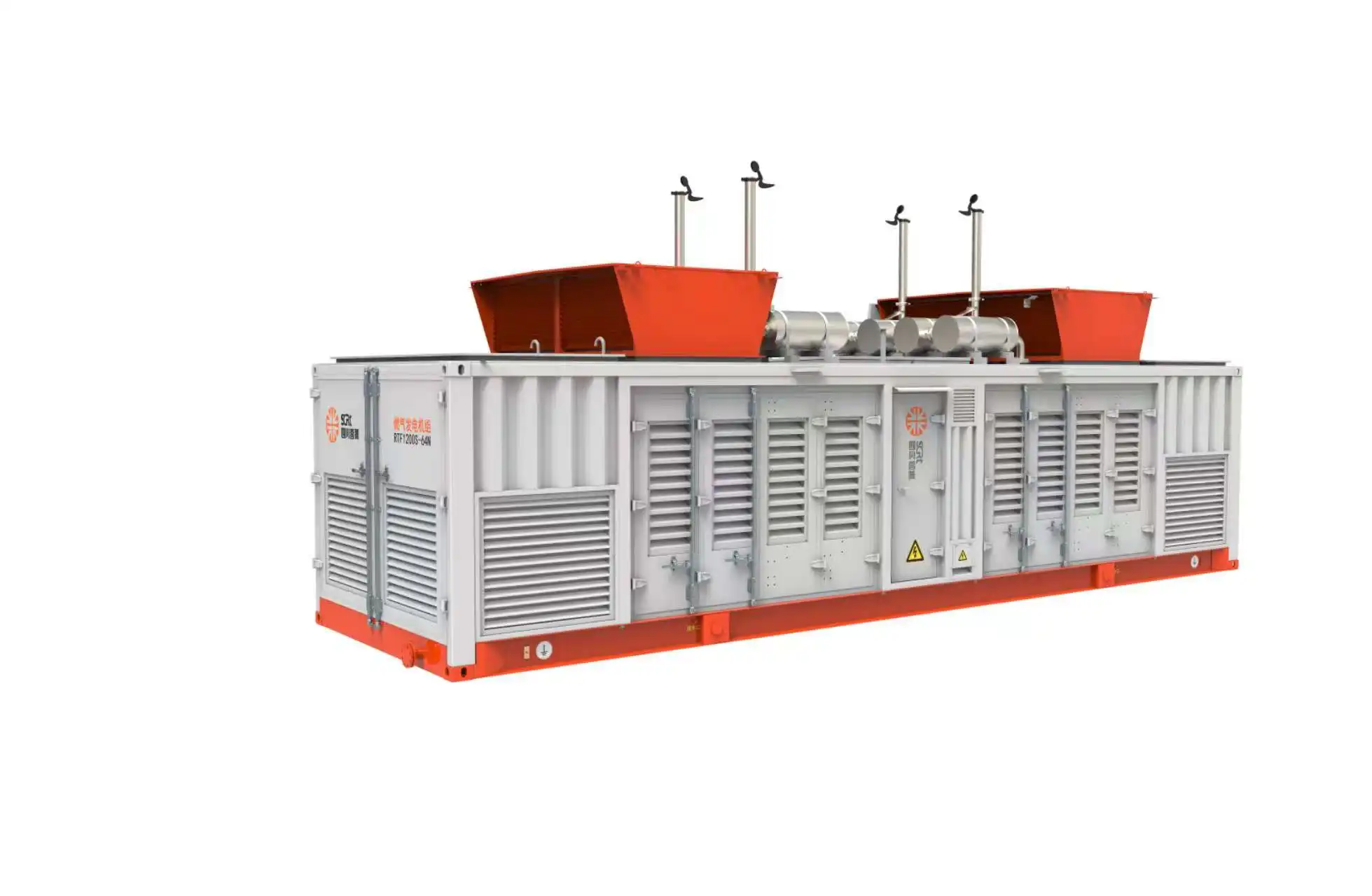
The Four Critical Synchronization Parameters for Gas Generator Sets
Voltage, Frequency, Phase Angle, and Phase Sequence: Why Tolerance Margins Are Tighter for Gas Generators
Precise synchronization of parallel gas generator sets demands exact alignment across four parameters—voltage, frequency, phase angle, and phase sequence. Gas units require tighter tolerances than diesel equivalents due to lower rotational inertia, slower governor response, and combustion dynamics that amplify instability from minor mismatches.
The voltage levels need to be pretty much spot on, within about half a percent difference, otherwise we get these nasty circulating currents that can wreck equipment. This requirement is way tighter than what's normally okay for diesel generators, which usually work fine with a tolerance of plus or minus 2%. When it comes to frequency sync, even small problems matter a lot. If there's more than a tenth of a hertz difference, it puts serious strain on rotor parts and their connections, which could lead to actual mechanical breakdowns down the road. Getting the phase angles right matters too they should stay within five degrees of each other. Bigger mismatches throw off how power gets shared between components and might even make systems shut themselves down automatically as a safety measure. And last but definitely not least, the phase sequence has got to be exactly the same on both sides (red-yellow-blue/red-yellow-blue). Get this wrong even just once and boom instant short circuit followed by major equipment damage. No exceptions here.
Gas engines tend to lag when dealing with sudden changes, which means checking parameters one after another can lead to problems during the validation process. That's why modern synchronization systems need to look at all four key parameters at once instead of sequentially. This kind of tight control stops something called out-of-step paralleling from happening. Out-of-step paralleling is actually the main reason stator windings get damaged in gas generator systems. According to a study published by Power Systems Engineering last year, around 37 percent of all synchronization issues come down to this exact problem. Getting this right makes a huge difference in system reliability.
- Voltage: >±0.5% deviation causes destructive circulating currents
- Frequency: >±0.1 Hz mismatch induces mechanical stress on couplings and rotors
- Phase Angle: >5° error destabilizes reactive power sharing
- Phase Sequence: Non-identical sequencing triggers immediate fault conditions
Manual and Automatic Synchronization Methods for Parallel Gas Generator Sets
Legacy Manual Techniques: Dark Lamp, Two-Bright-One-Dark, and Synchroscope Applications
When syncing manually, people typically look at visual cues like lamps or those fancy synchroscopes to get voltage, frequency, and phase angle all lined up properly. With the dark lamp approach, workers connect lamps between matching phases. When all the lights go out at once, that means everything is aligned correctly. There's another method called two bright one dark where technicians watch how the lamps glow. The pattern tells them if the phases are in order and also gives away clues about frequency mismatches. If they need something more accurate though, synchroscopes come into play. These devices show the rotation direction of phase angle differences in real time, so experienced operators know exactly when to throw the breaker switch for best results.
These methods remain viable for low-risk or backup applications but demand high operator proficiency. In high-stress or time-constrained scenarios, human error rates exceed 12%, increasing the risk of out-of-phase closure and associated equipment damage.
Modern Automatic Solutions: Digital Auto-Synchronizers with Integrated AVR/Governor Coordination
Digital auto-synchronizers eliminate reliance on operator judgment by continuously monitoring and adjusting generator outputs in real time. Using microprocessor-based logic, these systems compare busbar and generator voltage magnitude, frequency, and phase angle—then coordinate Automatic Voltage Regulators (AVR) and engine governors to achieve synchronization within ±0.25% tolerance.
Closed-loop communication ensures seamless load transfer and stable post-synchronization operation. Automation reduces paralleling failures by 92% compared to manual methods and enables dynamic response to load fluctuations—essential for maintaining combustion stability in gas-fueled units, which demand tighter synchronization margins than diesel alternatives.
Load Sharing Stability and Control Strategies in Parallel Gas Generator Set Systems
Droop vs. Isochronous Control: Balancing Real Power, Reactive Power, and System Resilience
Two primary control strategies govern load sharing in parallel gas generator systems: droop control and isochronous control—each with distinct trade-offs in stability, responsiveness, and system resilience.
When using droop control, the real power output changes based on how much the frequency deviates from normal levels. Basically, generators cut back on their kW production when system frequency goes up, but they kick in more power when frequency drops down. What makes this approach interesting is that it automatically shares the load between different units and acts as built-in protection against overloads in systems where multiple sources are connected together. There's one catch though. Droop control doesn't handle reactive power very well. During those moments when kVAR levels fluctuate, there isn't much compensation happening for voltage stability. This can actually make voltage quality worse in factories or plants running variable loads throughout the day.
Isochronous control, by contrast, maintains constant system frequency regardless of load changes via rapid governor action. It delivers superior voltage regulation and transient response but introduces coordination challenges: without precise inter-unit communication, it can generate circulating currents and torque oscillations during sudden load shifts.
For mission-critical facilities, hybrid implementations often deliver optimal performance—using isochronous control for base-load stability and switching to droop mode during peak demand to enhance resilience. Such configurations maintain frequency deviation under 3%, meeting the IEEE 1547-2021 standard for distributed energy resource interconnection.
| Control Method | Real Power (kW) Stability | Reactive Power (kVAR) Handling | Resilience Against Load Fluctuations |
|---|---|---|---|
| Droop Control | Proportional balancing | Limited voltage compensation | High (prevents generator overload) |
| Isochronous | Fixed frequency | Tight voltage regulation | Moderate (requires precise tuning) |
Effective load sharing also depends on integrated coordination between governors and AVRs. Under-frequency load shedding and multi-stage protection relays serve as essential safeguards during synchronization anomalies or control failures.
Risks, Failures, and Proven Mitigation Practices for Gas Generator Set Synchronization
Preventing Catastrophic Out-of-Step Paralleling: Circulating Currents, Torque Stress, and Protection Relay Coordination
Out-of-step paralleling poses severe risks to gas generator sets—including circulating currents exceeding 300% of rated capacity and mechanical torque stress capable of shearing shafts within five seconds. These failures stem from parameter mismatches beyond safe thresholds: voltage deviations >±5%, frequency errors >±0.3 Hz, or phase-angle misalignment >10° at closure.
To prevent such events, modern protection systems deploy layered relay coordination:
- Differential relays isolate faulty units within two cycles when current imbalances exceed 15–20%
- Reverse-power relays detect load-sharing faults before torque oscillations damage windings
- Synchronism-check relays block circuit-breaker closure unless phase-angle alignment remains under 5°
Proven operational mitigations include continuous torque monitoring via vibration sensors and mandatory dead-bus verification prior to paralleling. When implemented together, these practices reduce synchronization failures by 92% in mission-critical installations, according to 2023 power resilience studies.
FAQ
- Why do gas generator sets require tighter synchronization tolerances than diesel generators? Gas generator sets have lower rotational inertia, slower governor response, and combustion dynamics that amplify instability from minor mismatches, necessitating tighter synchronization tolerances.
- What happens if gas generator sets are not synchronized correctly? Incorrect synchronization can lead to destructive circulating currents, mechanical breakdowns, reactive power sharing destabilization, and immediate fault conditions.
- What are common synchronization methods for gas generators? Common synchronization methods include manual techniques using visual cues such as dark lamp approach, two bright one dark method, and synchroscopes, as well as modern automatic solutions using digital auto-synchronizers with integrated AVR/governor coordination.
- What control strategies govern load sharing in parallel gas generator systems? Two primary control strategies are droop control, which automatically shares the load, and isochronous control, which maintains constant system frequency. Hybrid implementations can also be used for optimal performance.
- How can catastrophic out-of-step paralleling be prevented? Modern protection systems deploy layered relay coordination and operational mitigations like continuous torque monitoring and dead-bus verification prior to paralleling, greatly reducing synchronization failures.
Table of Contents
- The Four Critical Synchronization Parameters for Gas Generator Sets
- Manual and Automatic Synchronization Methods for Parallel Gas Generator Sets
- Load Sharing Stability and Control Strategies in Parallel Gas Generator Set Systems
- Risks, Failures, and Proven Mitigation Practices for Gas Generator Set Synchronization